Within Estonia UFO Files
How Soviet Secrecy Shaped Estonia's UFO Stories
Estonia's Soviet-period UFO reports reflect a time when secrecy and limited archives shaped how unusual aerial observations were recorded.
On this page
- Cold War conditions and restricted information
- Private collections and later recollections
- Assessing historical reliability
Page outline Jump by section
Introduction
Soviet-era UFO stories in Estonia are shaped less by a large body of preserved official evidence than by the conditions in which unusual observations were recorded, discussed, and sometimes forgotten. During the period when Estonia was part of the Soviet Union (1940–1991, with a wartime interruption), military activity, aviation information, and many state records were not openly accessible. As a result, reports of strange lights or objects from this period often survive through later recollections, private archives, newspapers, and the work of independent researchers rather than through a complete government catalogue.
The central historical issue is therefore not whether Soviet-era Estonians reported unusual aerial events, but how confidently those reports can be reconstructed today. Some observations may have involved aircraft, satellites, rockets, atmospheric effects, or military activity that was poorly understood by witnesses. Others remain unresolved because the original documentation, if it ever existed, is incomplete or unavailable. This pattern resembles wider Soviet and Cold War-era UFO research, where secrecy and security concerns often influenced what was recorded and what became public.[The National Archives]nationalarchives.gov.ukThe National Archives UFO reportsThe National ArchivesUFO reports - The National Archives…
Cold War conditions and restricted information
Why Soviet-era records are difficult to trace
Estonia’s position inside the Soviet system created a particular problem for historical UFO research: many unusual aerial observations occurred in a region with important military infrastructure but limited public access to information. The Soviet Union maintained extensive military aviation, naval, and missile activity across the Baltic region, yet much of this activity was classified or discussed only within official channels.
Unlike later civilian reporting systems in some Western countries, there is no widely accessible Soviet-era Estonian archive devoted specifically to unidentified aerial phenomena. In countries where formal UFO records were maintained, such as the United Kingdom, investigators often preserved witness forms, dates, locations, weather information, and follow-up explanations. These archives show how even unusual reports were usually treated as observations requiring identification rather than as proof of extraordinary causes.[The National Archives]nationalarchives.gov.ukThe National Archives UFO reportsThe National ArchivesUFO reports - The National Archives… Estonia’s Soviet-period record is more fragmented, making similar verification difficult.
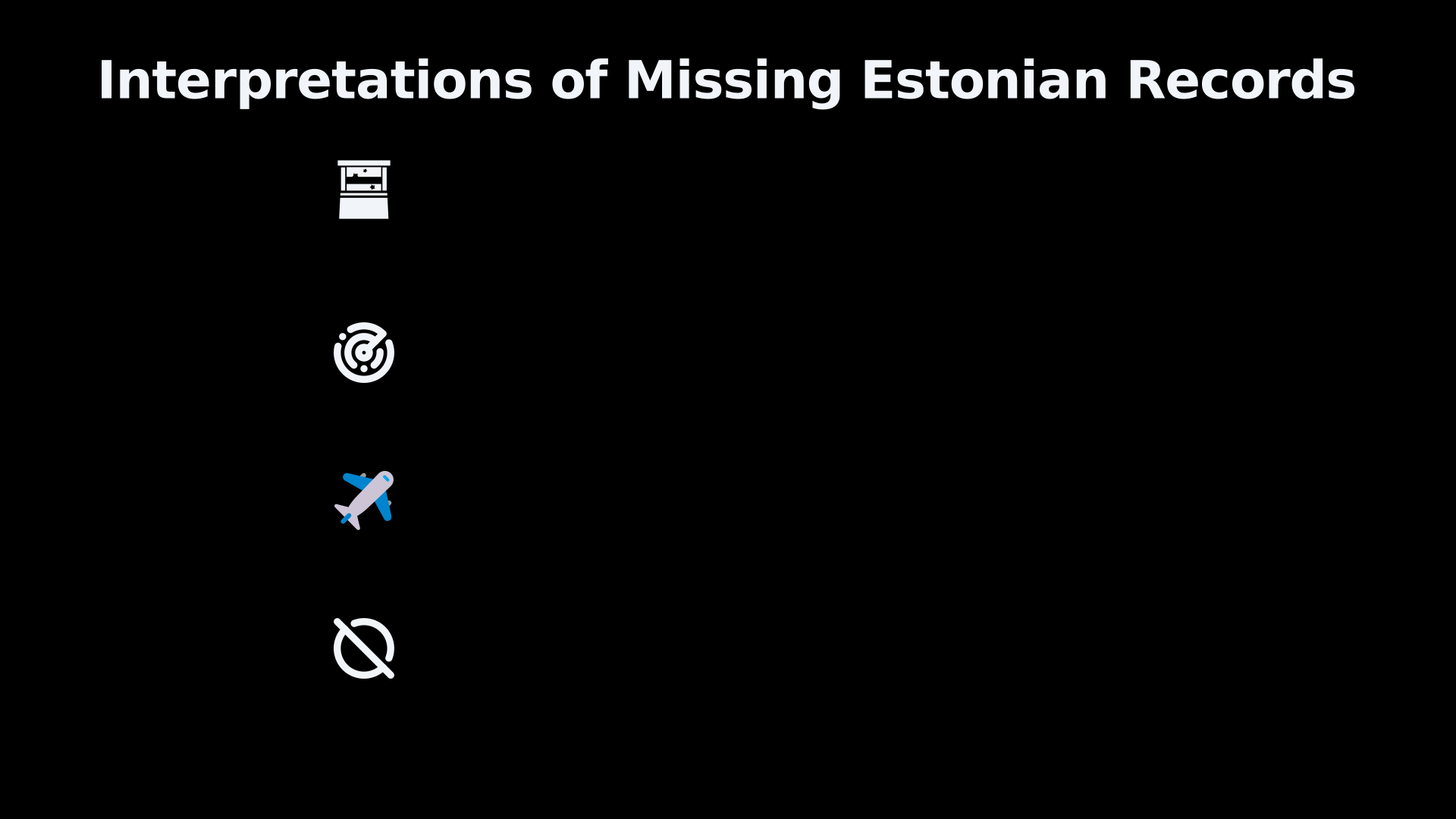
The absence of a central archive has encouraged two competing interpretations. UFO researchers have argued that missing documentation may reflect secrecy around sensitive military activity. Skeptical researchers have pointed out that missing records also mean that many claims cannot be tested against basic evidence such as radar data, flight information, original witness statements, or contemporary investigation notes.
Soviet secrecy did not mean the subject was ignored
Although public discussion of UFOs was restricted at different times, the Soviet Union did not completely ignore reports of unexplained aerial phenomena. From the late 1960s onward, Soviet researchers and officials collected accounts of unusual observations, sometimes using the term “anomalous atmospheric phenomena”. Soviet investigations often considered explanations such as atmospheric effects, technical failures, and foreign technology rather than assuming an extraterrestrial cause.[Wikipedia]WikipediaFelix ZiegelFelix Ziegel
This broader Soviet interest provides important context for Estonia. The lack of easily available Estonian files does not necessarily indicate that unusual reports were absent. It reflects the wider problem of researching events inside a state where scientific, military, and intelligence information followed restricted channels.
Private collections and later recollections
How Estonian UFO history was preserved after the Soviet period
Much of Estonia’s Soviet-era UFO material entered public discussion through independent researchers rather than official institutions. One of the most prominent figures was Estonian researcher Igor Volke, who founded the organisation AKRAK in 1985 to collect and analyse reports of anomalous environmental phenomena, including UFO accounts. Such groups became important because they preserved witness stories that might otherwise have disappeared.[Wikipedia]WikipediaIgor VolkeIgor Volke
These collections provide valuable historical evidence, but they also create challenges. A witness account recorded years after an event may preserve important details, yet memories can change over time. Later retellings may also combine original observations with interpretations added during decades of UFO discussion.
For Soviet-era Estonia, the strongest historical material tends to be:
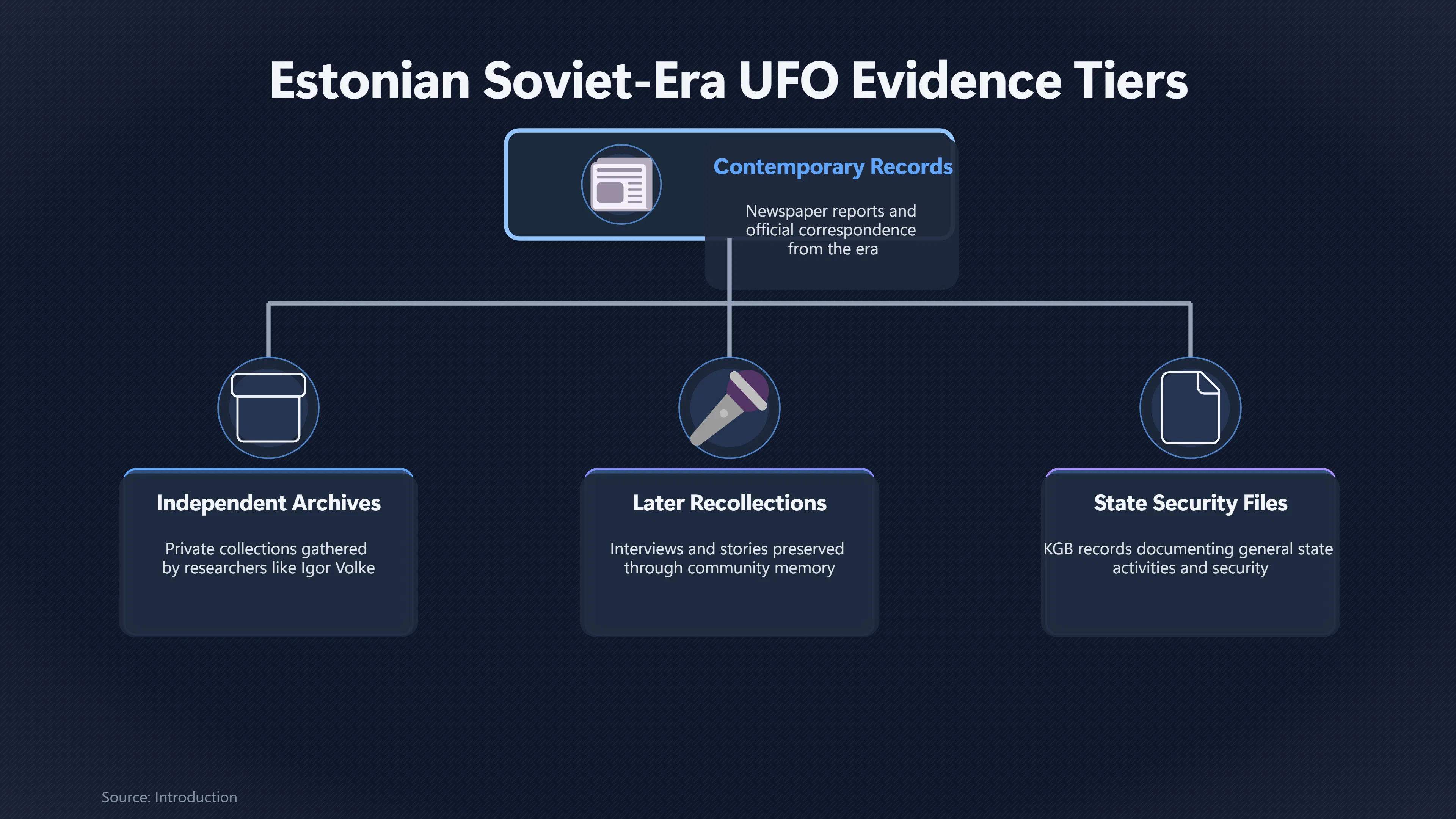
- Contemporary records: newspaper reports, dated letters, official correspondence, or investigation notes created close to the event.
- Independent archives: collections made by researchers who gathered witness statements and attempted classification.
- Later memories: interviews and stories that preserve local accounts but require careful evaluation.
The difference between these categories is crucial. A remembered sighting can show that a community discussed an event, but it does not automatically prove what caused the observation.
Missing records and the problem of reconstruction
The Soviet collapse created new opportunities for historical research, including access to some previously restricted state materials. However, surviving archives are uneven. Collections connected to Soviet security structures, including the Estonian Soviet Socialist Republic KGB records, contain extensive documentation of state activities, but they are not a dedicated source of UFO investigations and do not provide a complete record of unusual aerial observations.[Hoover Institution]hoover.orgInstitution Eesti NSV Riikliku Julgeoleku Komitee Records | Hoover InstitutionHoover InstitutionEesti NSV Riikliku Julgeoleku Komitee Records | Hoover Institution…
This creates a common difficulty in Soviet-era UFO research: researchers often begin with a story and search for supporting documentation afterwards, rather than starting with a complete official record. The result is a historical landscape where some cases are well remembered but poorly documented.
Assessing historical reliability
What can be established and what remains uncertain
The most reliable conclusion about Soviet-era UFO stories in Estonia is that unusual aerial observations were part of the region’s broader Cold War culture, but the surviving evidence is generally insufficient to verify extraordinary explanations.
A careful assessment separates three levels of confidence:
Well-supported historical facts
- People in Estonia and across the Soviet Union reported unusual objects and lights.
- Soviet researchers and organisations collected some UFO-related reports.
- Military secrecy and restricted information affected what ordinary citizens could know about aviation and defence activity.[The National Archives]nationalarchives.gov.ukThe National Archives UFO reportsThe National ArchivesUFO reports - The National Archives…
Plausible but unconfirmed interpretations
- Some sightings may have involved aircraft, missile launches, satellites, space activity, or atmospheric phenomena.
- Some reports may have been connected to military operations that were not publicly explained at the time.
Claims without sufficient public evidence
- Assertions that Soviet-era Estonian sightings involved extraterrestrial craft or recovered technology remain unsupported by publicly available documentation.
Why missing evidence matters
The lack of records is itself historically significant. In many Cold War UFO cases, secrecy created uncertainty in two directions: ordinary observers could misidentify restricted military activity, while later researchers could interpret the absence of information as evidence of concealment. Neither possibility can be confirmed without stronger documentation.
For Estonia, the Soviet-era UFO record is therefore best understood as a history of observation, memory, and incomplete archives. The most important feature of these stories is not a proven hidden event, but the way Cold War conditions shaped what people saw, what they reported, and what information survived.
Amazon book picks
Further Reading
Books and field guides related to How Soviet Secrecy Shaped Estonia's UFO Stories. Use these as the next step if you want deeper reading beyond the article.
In Plain Sight: an Investigation Into UFOs and Impossible Sci...
Includes discussion of government secrecy and historical cases.

UFOs: Generals, Pilots, and Government Officials Go on the Re...
Covers government records and investigative standards.
The Hunt for Zero Point
Provides Cold War context relevant to secrecy and advanced technology claims.
eBay marketplace picks
Marketplace Samples
Live-tested eBay searches with available results related to this page.
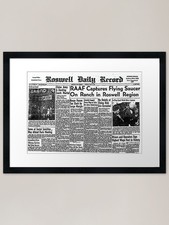
Selected fromRoswell UFO poster oneBay.co.uk.


Endnotes
1.
Source: hoover.org
Title: Institution Eesti NSV Riikliku Julgeoleku Komitee Records | Hoover Institution
Link:https://www.hoover.org/library-archives/collections/eesti-nsv-riikliku-julgeoleku-komitee-records
Source snippet
Hoover InstitutionEesti NSV Riikliku Julgeoleku Komitee Records | Hoover Institution...
2.
Source: Wikipedia
Title: Felix Ziegel
Link:https://en.wikipedia.org/wiki/Felix_Ziegel
3.
Source: Wikipedia
Title: Igor Volke
Link:https://en.wikipedia.org/wiki/Igor_Volke
4.
Source: history.state.gov
Link:https://history.state.gov//historicaldocuments/frus1933-39/d768
5.
Source: history.state.gov
Link:https://history.state.gov/historicaldocuments/frus1933-39/d747
6.
Source: history.state.gov
Link:https://history.state.gov//historicaldocuments/frus1933-39/d738
7.
Source: nationalarchives.gov.uk
Title: The National Archives UFO reports
Link:https://www.nationalarchives.gov.uk/explore-the-collection/explore-by-time-period/postwar/ufo-reports/
Source snippet
The National ArchivesUFO reports - The National Archives...
8.
Source: ufofiles.info
Link:https://ufofiles.info/explore
Additional References
9.
Source: ojs.erm.ee
Link:https://ojs.erm.ee/index.php/ermer/article/view/210
Source snippet
Moora – Nõukogude Eesti etnograafia sihiseadja | Eesti Rahva Muuseumi aastaraamatJuly 21, 2025 — HARRI MOORA – NÕUKOGUDE EESTI ETNOGRAAFI...
Published: July 21, 2025
10.
Source: ibtimes.co.uk
Link:https://www.ibtimes.co.uk/soviet-era-ufo-documents-released-journalist-claim-giant-jellyfish-shaped-craft-sightings-1778077
Source snippet
Soviet-Era UFO Documents Released by Journalist Claim Giant 'Jellyfish-Shaped' Craft Sightings | IBTimes UKFebruary 11, 2026 — SOVIET-ERA...
Published: February 11, 2026
11.
Source: reddit.com
Link:https://www.reddit.com/r/AcademicUAP/comments/1hri5j9
Source snippet
History of UFO State Research in the USSR, Bulletin of the Russian Academy of Sciences, Yu. Paltov & B. Sokolov...
12.
Source: ufo-declassified.com
Title: The record is date
Link:https://ufo-declassified.com/documents/release-02-file-004-cia-uap-d001-intelligence-information-report-ussr-1973/
Source snippet
CIA-UAP-D001 - Intelligence Information Report, USSR, 1973 | UFO DeclassifiedMay 22, 2026 — CIA-UAP-D001 - INTELLIGENCE INFORMATION REPOR...
Published: May 22, 2026
13.
Source: preprints.org
Link:https://www.preprints.org/manuscript/202603.2355
Source snippet
Intelligence as Ethnography: CIA Reports and the Social Life of Soviet Estonia, 1947–1955[v1] | Preprints.orgMarch 31, 2026 — Version 1 S...
Published: March 31, 2026
14.
Source: cia.gov
Title: REPOR T OF UFO AT TIME OF SOVIET SATELLITE FAILURE | CIA FOIA (foia.cia.gov)
Link:https://www.cia.gov/readingroom/document/0005516073
15.
Source: borderlandsciences.org
Link:https://borderlandsciences.org/journal/vol/38/n05/Blomqvist_Juri_Lina_interview.html
16.
Source: ufomagazines.com
Link:https://www.ufomagazines.com/rapportnytt-rapportnytt-1977-no-4/
17.
Source: si.edu
Link:https://www.si.edu/object/siris_sil_744321
18.
Source: ovniarchive.com
Link:https://ovniarchive.com/doc/12?lang=en