Within Laos
How Secret Flights Shaped Laos's UFO Stories
Covert aircraft, helicopters, flares, tracer fire, and bombing activity made wartime Laos unusually difficult for witnesses to interpret accurately.
On this page
- The scale of covert air operations
- Aircraft, flares, and battlefield lights
- Why later memories require caution
Page outline Jump by section
Introduction
From the late 1950s until 1974, Laos was the scene of one of the world’s largest covert air campaigns. The combination of secret military aviation, mountainous terrain, limited communications and widespread public ignorance of many operations created ideal conditions for aerial misidentification. Although Laos has very few well-documented UFO reports in the public record, its wartime environment helps explain why witnesses could honestly report strange lights, silent aircraft or unexplained movements without those observations necessarily representing genuinely unknown phenomena.
This context is important when evaluating historical sightings. During the so-called Secret War, aircraft frequently operated from concealed airstrips, flew at night, used illumination flares, conducted reconnaissance with unfamiliar equipment and often lacked publicly acknowledged flight schedules. In many parts of rural Laos, observers had little opportunity to recognise the appearance or behaviour of these aircraft. As a result, wartime observations require careful historical reconstruction rather than retrospective assumptions that unidentified automatically meant extraordinary.[CIA]cia.govcia air operations in laosCIA Air Operations in Laos, 1955-1974 - CSI…
The scale of covert air operations
Laos was officially neutral under international agreements, yet it became one of the busiest covert aviation theatres of the Cold War. Much of the air activity remained deliberately concealed from both the international public and many people within Laos itself.
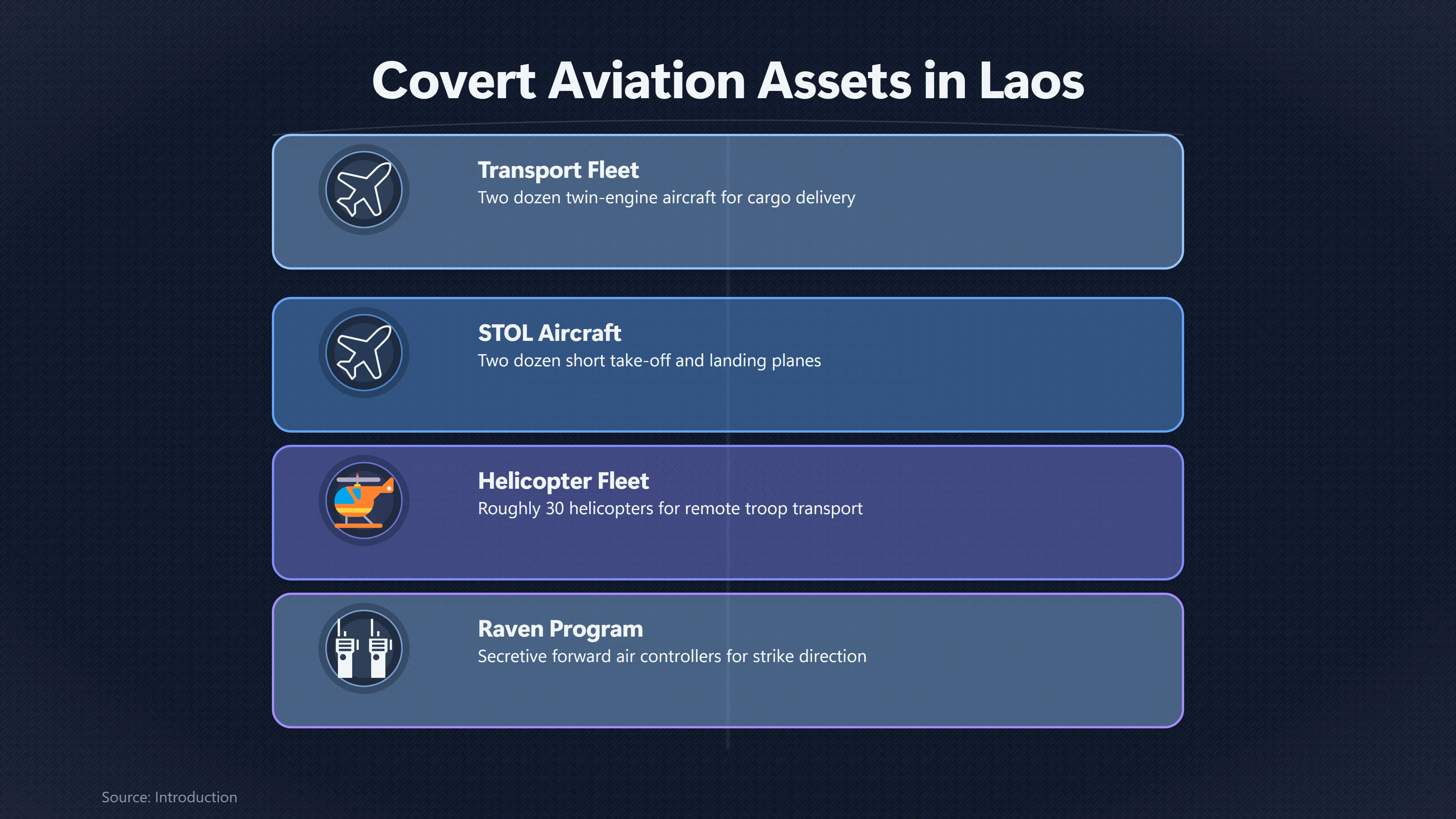
The Central Intelligence Agency’s proprietary airline, Air America, formed a major part of this hidden network. By the summer of 1970 it operated approximately two dozen twin-engine transport aircraft, another two dozen short take-off and landing (STOL) aircraft, and roughly 30 helicopters dedicated to operations inside Laos. Hundreds of pilots, mechanics and support personnel maintained an intensive schedule that included cargo delivery, troop transport, medical evacuation, reconnaissance, search-and-rescue missions and clandestine insertions across remote regions.[CIA]cia.govcia air operations in laosCIA Air Operations in Laos, 1955-1974 - CSI…
Alongside Air America were numerous other covert and overt aviation activities, including:
- Royal Lao Air Force combat operations.
- US Air Force forward air controllers, including the highly secretive Raven programme.
- Armed T-28 aircraft flying close air support.
- Helicopter operations supplying isolated mountain positions.
- Reconnaissance aircraft monitoring the Ho Chi Minh Trail.
- Night interdiction missions over eastern Laos.
- Extensive bombing campaigns such as Operation Barrel Roll in northern Laos.[af.mil]nationalmuseum.af.milOpen source on af.mil.
Many of these missions deliberately avoided publicity. Aircraft often carried minimal identifying markings or operated under civilian cover, while American personnel frequently worked in unofficial capacities because of the political sensitivity surrounding US involvement in Laos. That secrecy inevitably influenced how unusual aerial activity was perceived by local populations.
Aircraft, flares and battlefield lights
Many wartime aerial phenomena that could appear mysterious to civilians have well-understood military explanations.
Unfamiliar aircraft silhouettes
Remote communities in Laos encountered an unusually diverse mixture of aircraft that differed significantly from conventional commercial aviation. STOL transports such as the Pilatus Porter and Helio Courier could operate from extremely short mountain strips, while helicopters repeatedly appeared in valleys where fixed-wing aircraft had previously been the only visible aviation.
Forward air control aircraft, including small observation planes, often circled slowly for extended periods before directing strike aircraft onto targets. To witnesses unfamiliar with military procedures, these repeated circular patterns could appear inexplicable rather than tactical.[af.mil]nationalmuseum.af.milOpen source on af.mil.
Illumination flares
Illumination flares represented one of the most likely sources of unusual nighttime reports.
Military forces routinely deployed parachute flares that could:
- remain suspended for several minutes;
- drift with changing winds;
- appear almost motionless from a distance;
- brighten or dim unpredictably as atmospheric conditions changed;
- illuminate entire valleys before disappearing suddenly.
To observers several kilometres away, such lights could resemble hovering luminous objects rather than descending pyrotechnic devices.
Tracer fire and bombing
Combat operations also generated striking visual effects:
- tracer rounds crossing the sky;
- anti-aircraft fire;
- secondary explosions from ammunition stores;
- bomb impacts producing flashes beyond mountain ridges;
- smoke and dust illuminated by fires.
Mountainous terrain further complicated interpretation because peaks repeatedly obscured aircraft while leaving only flashes or moving lights visible. An aircraft disappearing behind a ridge while its flare remained visible could create the impression that an independent glowing object had separated from the aircraft.

Why secrecy made identification unusually difficult
Most wartime aviation can be recognised in retrospect because flight records, military acknowledgements or local media reports eventually become available. Laos differed because secrecy was itself an operational requirement.
Large numbers of missions were officially denied at the time. Local witnesses therefore lacked the contextual information that normally helps identify unusual aircraft.
Several factors compounded the problem:
- No published flight schedules. Aircraft could appear over isolated regions at any hour.
- Remote observation points. Many villages were separated by mountains, making sound direction and distance difficult to judge.
- Minimal aviation familiarity. Rural populations often had limited exposure to different aircraft types.
- Restricted communications. Rumours travelled faster than verified explanations.
- Political silence. Even local authorities might possess incomplete knowledge of covert operations occurring nearby.[CIA]cia.govcia air operations in laosCIA Air Operations in Laos, 1955-1974 - CSI…
These conditions mean that sincere eyewitness testimony alone cannot establish the nature of an observed object. Honest observers may accurately describe what they saw while remaining unable to identify its cause.
Why later memories require caution
Historical investigation becomes even more challenging when recollections emerge decades after the events.
Memory naturally changes over time. Witnesses may unintentionally combine separate incidents, compress timelines or reinterpret observations using concepts that became familiar only years later. Because public awareness of UFOs expanded considerably after the Vietnam era, later retellings sometimes employ terminology that was not necessarily used immediately after the observation.
Another complication is that many wartime records remain incomplete. Although numerous CIA and US government documents have been declassified, operational details for individual flights are often fragmentary, and many local Lao records were never systematically preserved or made publicly accessible. Consequently, investigators frequently cannot match a reported light or aircraft with a specific mission, even when a conventional explanation is likely.[CIA]cia.govcia air operations in laosCIA Air Operations in Laos, 1955-1974 - CSI…
The absence of documentation therefore has two possible explanations:
- the observation genuinely cannot be identified because evidence has been lost or was never recorded;
- the relevant military operation remained secret or poorly documented rather than representing an anomalous phenomenon.
These possibilities should not be confused.
What the historical evidence supports
Within the publicly accessible record, there are no well-documented Lao UFO incidents from the Secret War that include the combination of independent witnesses, precise timing, corroborating military records and physical evidence needed to establish an unexplained aerial event.
By contrast, there is abundant documentation showing that Laos experienced:
- exceptionally dense covert aviation;
- extensive helicopter operations;
- reconnaissance flights;
- clandestine transport missions;
- widespread use of illumination flares;
- continuous bombing in some regions;
- forward air control operations involving small, unusual aircraft.[cia.gov]cia.govcia air operations in laosCIA Air Operations in Laos, 1955-1974 - CSI…
That evidence does not prove every reported unidentified object had a conventional explanation. Instead, it establishes that wartime Laos possessed one of the richest environments imaginable for sincere but understandable aerial misidentification.
How this fits into Laos’s broader UFO record
The Secret War provides essential context for interpreting historical aerial reports from Laos, but it should not be used as a universal explanation for every unexplained observation. Some reports lack sufficient detail for any firm conclusion, while others occurred outside the principal period of covert military operations.
Nevertheless, the wartime environment substantially raises the threshold for interpreting historical sightings as anomalous. Before invoking extraordinary explanations, investigators must first consider the dense network of covert flights, reconnaissance aircraft, helicopters, battlefield illumination, bombing operations and secret logistics that characterised Laos between the 1950s and 1974. This historical framework also complements broader discussions of Laos’s sparse documented UFO record, the limited availability of official archives and the challenges of evaluating reports from remote regions where extraordinary military activity and limited public information coincided.
Amazon book picks
Further Reading
Books and field guides related to How Secret Flights Shaped Laos's UFO Stories. Use these as the next step if you want deeper reading beyond the article.

UFOs: Generals, Pilots, and Government Officials Go on the Re...
Encourages evidence-based evaluation of aerial reports.
Shooting at the Moon: The Story of America's Clandestine War...
Provides historical context for secret flights and military operations.
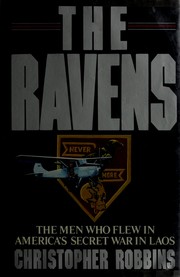
The Ravens: The Men Who Flew in America's Secret War in Laos
Explains the covert aviation environment behind many reported aerial misidentifications.
eBay marketplace picks
Marketplace Samples
Live-tested eBay searches with available results related to this page.
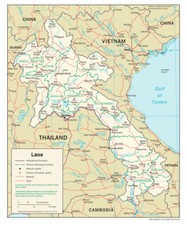
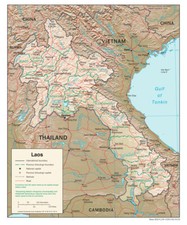
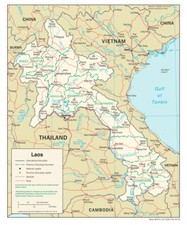
Selected fromLaos map print oneBay.co.uk.
Endnotes
1.
Source: cia.gov
Title: cia air operations in laos 1955 1974
Link:https://www.cia.gov/resources/csi/studies-in-intelligence/studies-in-intelligence-winter-1999-2000/cia-air-operations-in-laos-1955-1974/
Source snippet
CIA Air Operations in Laos, 1955-1974 - CSI...
2.
Source: cia.gov
Title: The Airmen’s Bond
Link:https://www.cia.gov/legacy/museum/artifact/the-airmens-bond/
Source snippet
The Airmen's Bond - CIA...
3.
Source: cia.gov
Title: Air America Upholding the Airmen’s Bond
Link:https://www.cia.gov/resources/publications/air-america-upholding-the-airmens-bond/
Source snippet
Air America Upholding the Airmen's Bond - CIA...
4.
Source: cia.gov
Title: cia air operations in laos 1955 1974
Link:https://www.cia.gov/resources/csi/studies-in-intelligence/archives/vol-43-no-3/cia-air-operations-in-laos-1955-1974/
5.
Source: cia.gov
Title: the cia and the u 2 program 1954 1974
Link:https://www.cia.gov/resources/csi/books-monographs/the-cia-and-the-u-2-program-1954-1974/
6.
Source: cia.gov
Link:https://www.cia.gov/resources/publications/stories-of-sacrifice-and-dedication-civil-air-transport-air-america-and-the-cia/
7.
Source: cia.gov
Title: cia rdp78t02095r000600110001 1
Link:https://www.cia.gov/readingroom/document/cia-rdp78t02095r000600110001-1
8.
Source: cia.gov
Title: JUSTIFICATIO N FOR AERIAL RECONNAISSANCE OF LAOS | CIA FOIA (foia.cia.gov)
Link:https://www.cia.gov/readingroom/document/cia-rdp63-00313a000500040088-7
9.
Source: nationalmuseum.af.mil
Link:https://www.nationalmuseum.af.mil/Visit/Museum-Exhibits/Fact-Sheets/Display/Article/195952/laos-plain-of-jars/fbclid/laos-plain-of-jars/
10.
Source: aljacobsladder.com
Title: Leary and Members of Talking P
Link:https://aljacobsladder.com/the-silent-war-reading-room/cia-air-operations-in-laos.html
Source snippet
CIA AIR OPERATIONS IN LAOS 1955-1974 | ALJACOBSLADDER.comJune 7, 2019 — CIA AIR OPERATIONS IN LAOS 1955-1974 Previous Next List CIA AIR O...
Published: June 7, 2019
11.
Source: biotech.law.lsu.edu
Title: air america
Link:https://biotech.law.lsu.edu/cases/nat-sec/Vietnam/air-america.htm
12.
Source: books.google.com
Title: CIA Air Operations in Laos 1955 1974
Link:https://books.google.com/books/about/CIA_Air_Operations_in_Laos_1955_1974.html?id=sK60DAEACAAJ
13.
Source: nationalmuseum.af.mil
Link:https://www.nationalmuseum.af.mil/Visit/Museum-Exhibits/Fact-Sheets/Display/Article/3405341/raven-forward-air-controllers/
14.
Source: nationalmuseum.af.mil
Link:https://www.nationalmuseum.af.mil/Visit/Museum-Exhibits/Fact-Sheets/Display/Article/3405324/artillery-threat/
15.
Source: nationalmuseum.af.mil
Link:https://www.nationalmuseum.af.mil/Visit/Museum-Exhibits/Fact-Sheets/Display/Article/3405503/from-butterflies-to-ravens/
Additional References
16.
Source: cslegion.com
Title: Tony Poe’s Outpost #6 – The Laos Air War – Campaign Series Legion
Link:https://cslegion.com/vietnam/tony-poes-outpost-6-the-laos-air-war/
Source snippet
July 25, 2018 — TONY POE’S OUTPOST #6 – THE LAOS AIR WAR by David Galster | Jul 25, 2018 | CS: Vietnam, Vietnam: Tony Poe's Outpost Image...
Published: July 25, 2018
17.
Source: ondisclosure.org
Title: war ufo rel03 cia uap 003 bd3c7815a3c61502
Link:https://ondisclosure.org/en/official-uap-cases/war-ufo-rel03-cia-uap-003-bd3c7815a3c61502
Source snippet
CIA-UAP-003, The Central Intelligence Agency and Overhead Reconnaissance; The U-2 and OXCART Programs, 1954-1974June 12, 2026 — CIA-UAP-0...
Published: June 12, 2026
18.
Source: youtube.com
Title: The Ravens: Covert Forward Air Controllers in Laos
Link:https://www.youtube.com/watch?v=kY3P9l1u-9k
Source snippet
These videos provide historical context on the extensive covert air campaigns, secret military operations, and diverse aircraft activitie...
19.
Source: history.com
Title: At the time, hardly anyone
Link:https://www.history.com/articles/air-america-cia-airline
Source snippet
Why the CIA Secretly Operated Air America in Southeast Asia | HISTORYMay 7, 2026 — By: Dan Roe Vietnam War WHY THE CIA SECRETLY OPERATED...
Published: May 7, 2026
20.
Source: youtube.com
Title: America’s Secret War: The CIA’s Hidden Campaign in Laos
Link:https://www.youtube.com/watch?v=uk8mayS3idE
Source snippet
Air America – The Airline That Wasn't Supposed to Exist...
21.
Source: ravens.org
Link:https://ravens.org/
Source snippet
Paul Carter, a historian living in Thailand, has just published a YouTube video covering the “Steve Canyon Program” or Raven FACs. Th...
22.
Source: youtube.com
Title: Air America – The Airline That Wasn’t Supposed to Exist
Link:https://www.youtube.com/watch?v=t318Lnei1F0
Source snippet
The Secret War: CIA Air Operations in Laos...
23.
Source: cfr.org
Link:https://www.cfr.org/books/great-place-have-war
24.
Source: legion.org
Link:https://www.legion.org/information-center/news/your-words/personal-experiences/my-experience-flying-in-the-secret-war-in-laos
25.
Source: ravens.org
Link:https://ravens.org/wp-content/uploads/2017/03/Episode9999.htm